CO alarm sounded, even once
Leave the house and call emergency services or the gas utility first. Then book a full venting inspection.
A gas heater is only as safe as its venting and gas connections. Flue problems and gas leaks don't announce themselves loudly — this check finds them before they become emergencies.
Clarksville, TN · Mon–Fri 7AM–7PM · Sat 8AM–4PM · 24/7 emergency dispatch
Clarksville Water Heater Repair
Every gas water heater produces combustion gases that must leave the house through a properly sized, properly routed flue — and it draws combustion air from its surroundings. A flue that is blocked, corroded, improperly sloped, or shared incorrectly with another appliance can spill carbon monoxide back into the home. Gas connections can develop slow leaks at joints that no one notices until a detector or a nose catches them. Neither problem shows up as 'no hot water,' which is exactly why they need a dedicated check rather than waiting for a breakdown to reveal them.
This service suits several moments: buying a home with an older gas heater, after any renovation near the heater or flue, if a carbon-monoxide alarm has sounded, or as part of an annual safety visit. If a CO alarm sounds, leave the house and call emergency services or your gas utility first — do not wait for a scheduled check. For a planned check, we inspect the full venting path, test gas connections, check draft, and test for carbon monoxide around the unit and nearby living spaces.
Common Clarksville findings: heaters in garages or utility closets starved of combustion air by storage piled around them; flues disconnected by other trades working nearby; and older single-wall vent connectors corroded by years of humid air. All three are fixable, and all three are invisible until someone looks.
Don't Ignore These
Leave the house and call emergency services or the gas utility first. Then book a full venting inspection.
Signs of poor draft or condensation in the vent — combustion gases may not be leaving properly.
Any change to the flue path or the room can change draft. Re-check after the work.
Upfront & Simple
1
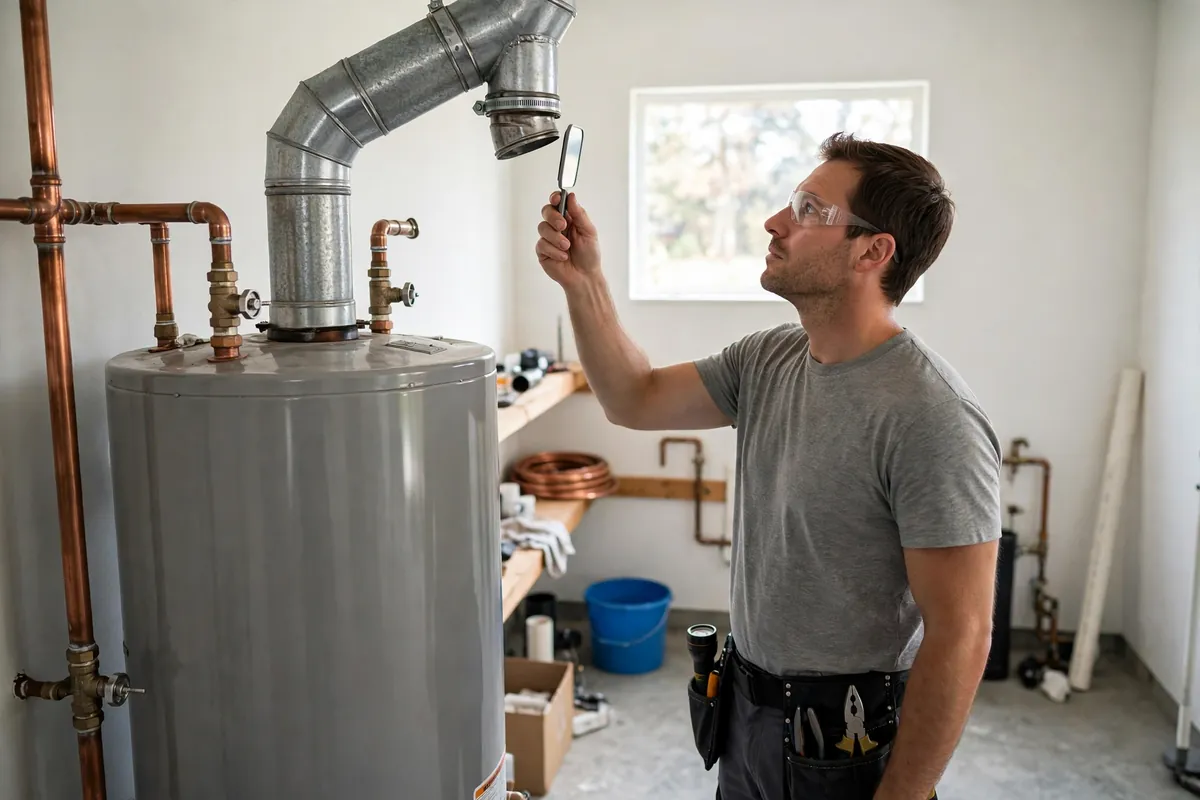
From the heater's draft hood to the termination outside, every joint and section.
2
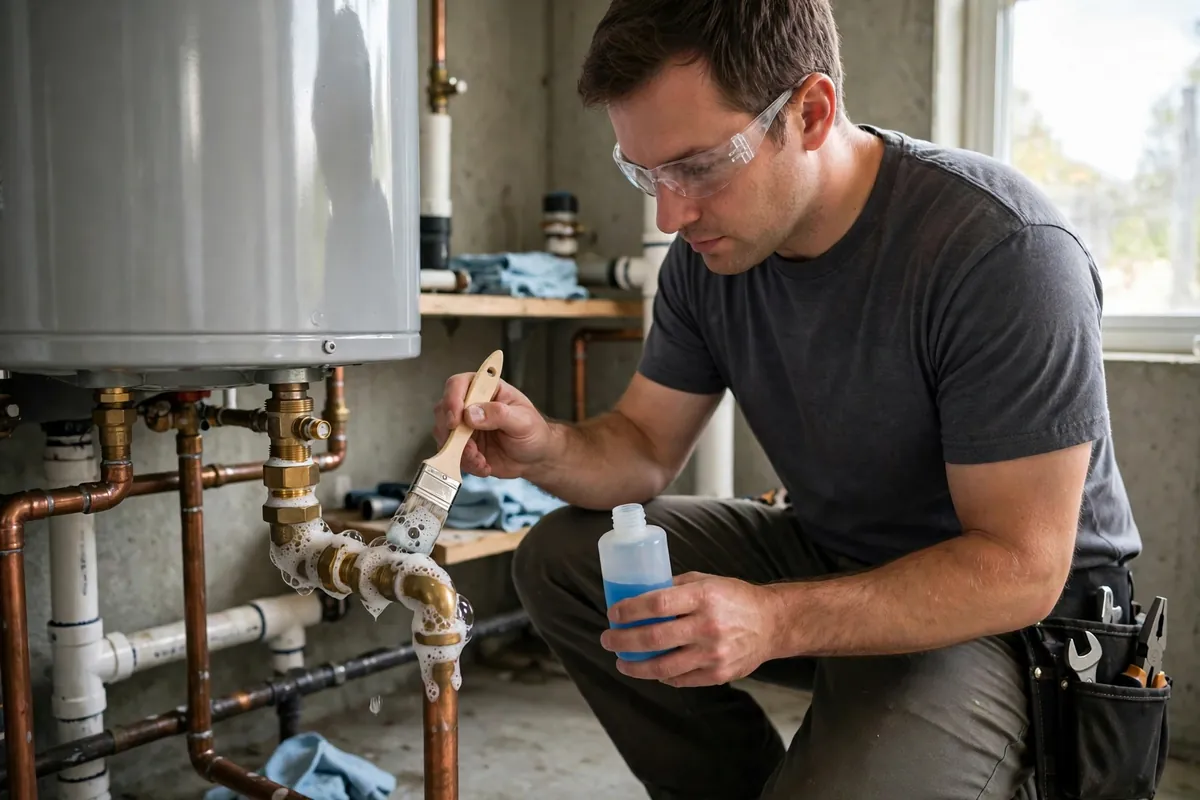
Draft under operating conditions; leak-testing at every gas connection.
3
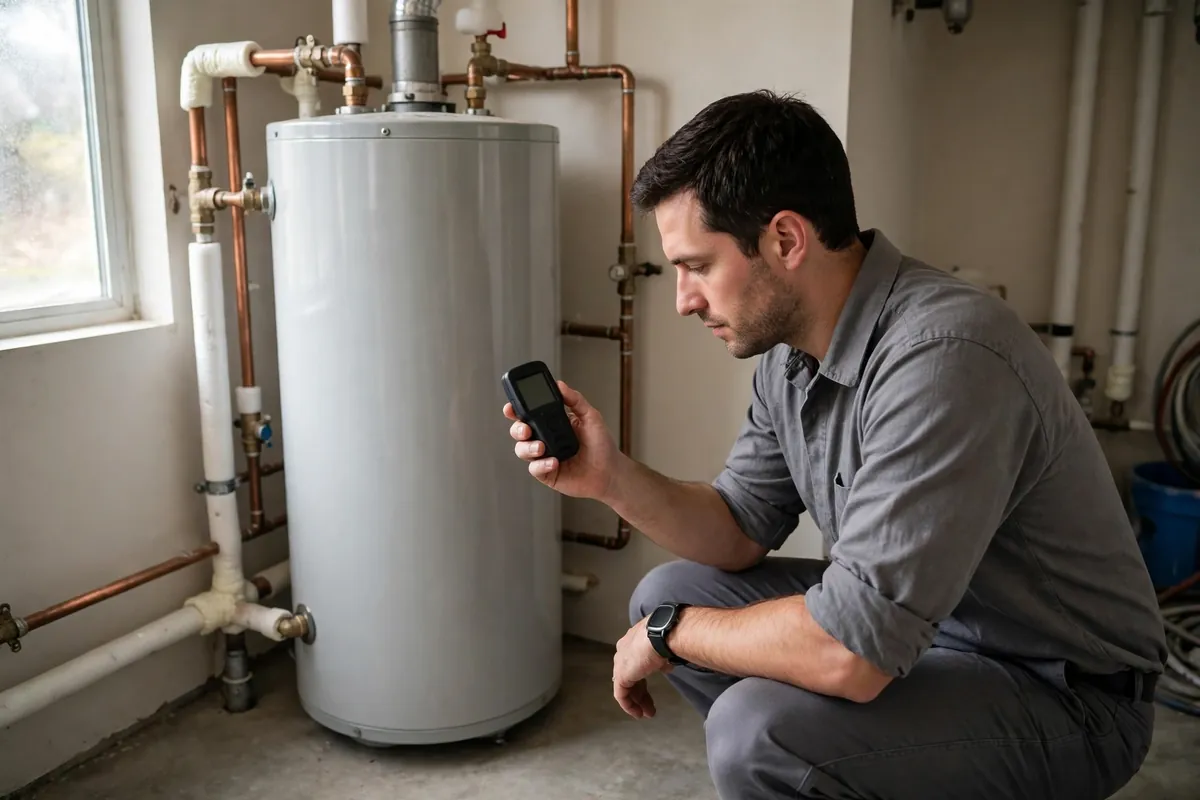
Around the unit and in adjacent living spaces.
4
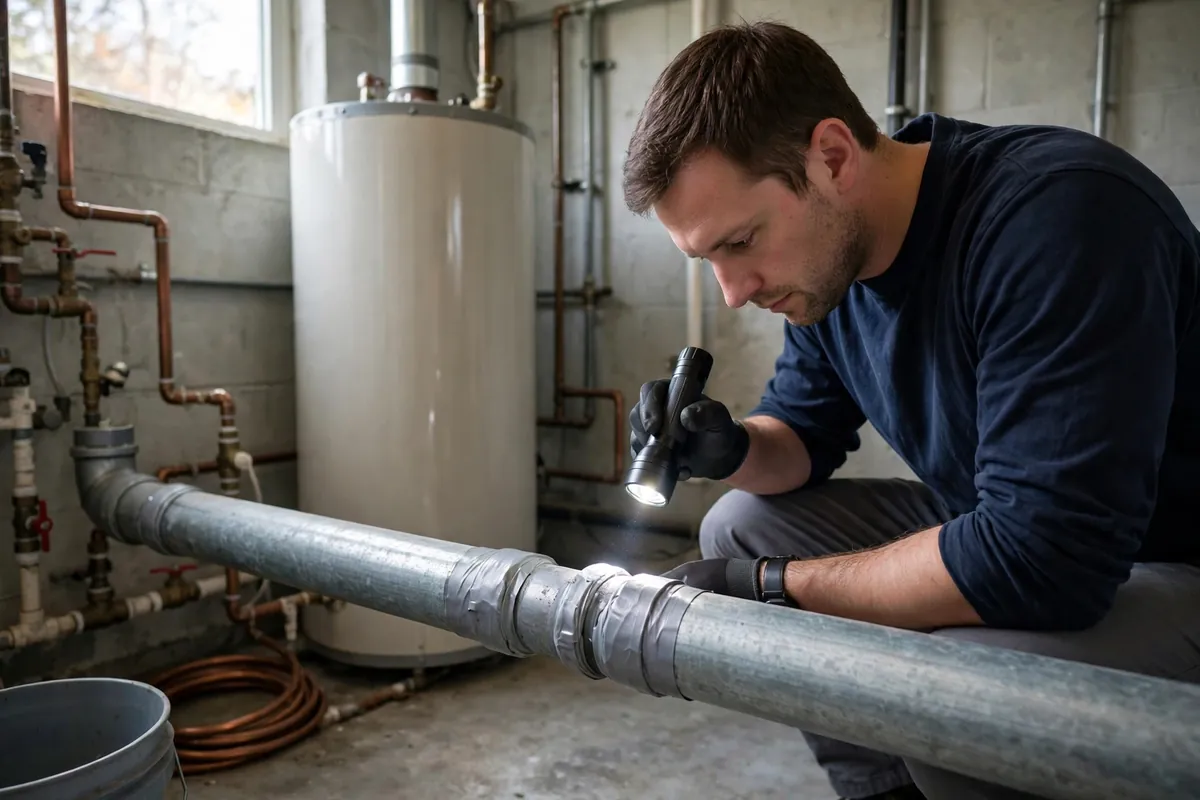
Safe, monitor, or fix now — with what we found and what it costs to fix.
Honest Pricing
A safety check itself is a modest inspection visit. Costs rise only if corrections are needed — flue-section replacement, connector repair, or gas-joint work — and those are quoted separately, after the inspection, before any work. We never bundle a scary finding with a same-day pressure sale; you get the findings in writing and time to decide, except where an immediate hazard requires immediate action.
You approve one price before any work begins — no surprise line items, and no work starts without your say-so. If a repair stops making sense next to the age of the unit, we will say so plainly and talk through replacement instead of pushing a repair.
Clarksville Plumber Repair Pro
Tell us what your water heater is doing — or not doing — and we will get a visit booked. You approve the price before any work begins.
Good To Know
When combustion gases flow back into the home instead of up the flue — caused by blockages, poor flue design, or negative pressure from exhaust fans. It is a carbon-monoxide risk and needs prompt correction.
Yes — detectors are cheap, essential protection for any home with gas appliances. A detector does not replace venting checks, but it is your early warning if venting fails.
Annually, alongside heater maintenance, and after any work near the flue or heater. Corrosion and disconnections develop silently between checks.
Gas is odorised so leaks are detectable by smell, but small leaks in ventilated spaces can be missed. We test joints with proper detection methods, not smell alone.
We make it safe first — isolating gas or the appliance as needed — and explain exactly what was found and what the fix involves before any further work.
Clarksville Plumber Repair Pro
Tell us what your water heater is doing — or not doing — and we will get a visit booked. You approve the price before any work begins.
Brands We Service
Brand names are shown for identification only. We make no dealer or certification claim for any brand.